


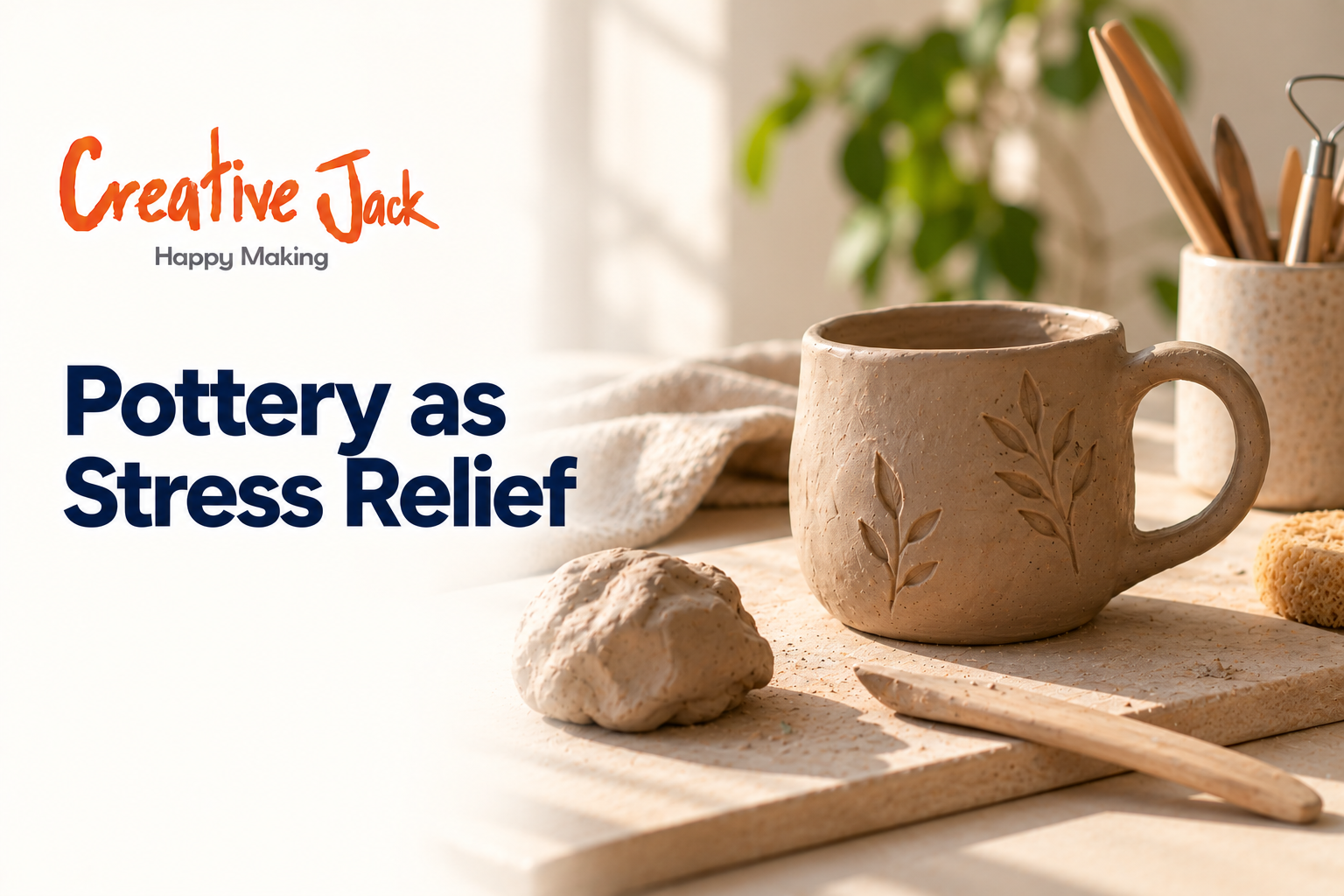
Pottery as Stress Relief: Why Working With Clay Helps
Pottery can help with stress because it asks for slow, repetitive hand movements and your full attention, which leaves little room for racing thoughts. Pressing, rolling, and smoothing clay is physical, tactile, and absorbing. You do not need any skill to feel the benefit, and many people find that an hour with clay feels like a proper break in a way that scrolling a phone never quite does.
What You'll Find in This Article
• Why working with clay tends to calm people down
• What a relaxing pottery session looks like in practice
• A few simple exercises you can try at home
• Honest limits: what pottery can and cannot do for stress
Why Ordinary Breaks Don't Always Work
Most of us take breaks that don't really feel like breaks. We lie down with a phone. We switch from one screen to another. We eat lunch at a desk. Our hands stay busy with a device, and our minds stay busy with everything else.
A break that works usually involves doing something with your hands, in a space away from your usual routine, with a clear start and finish. Clay happens to meet all three conditions. The material is cool, heavy, and slightly resistant, and it responds to pressure. That feedback holds attention in a gentle way.
What Makes Clay Calming
It is tactile. Clay is one of the few materials that involve nearly the entire hand, palm, fingertips, and thumb. Many people describe the feeling as grounding. It brings you back to your body.
It is slow. You cannot rush clay. If you push too hard or too fast, the piece collapses. That forces a pace that most of us rarely choose in our working lives.
It needs focus without pressure. Unlike a work task, there is nothing to get wrong. A lopsided bowl is still a bowl. The stakes are low, so your attention can settle on what you are doing instead of what might go wrong.
It gives you something to show for your time. At the end of an hour you are holding something you made. That quiet sense of having done something real is surprisingly restful.
It is social without being demanding. In a group session, you can talk or stay quiet. Many people enjoy working alongside others without needing to hold a conversation.
A Word of Caution
Art-making is often described as a stress reliever, and many people do find it helps. Researchers who study art therapy have reported that short sessions of creative work can lower stress levels in some participants, though results vary from person to person. Pottery is a good habit and a pleasant way to unwind. It is not a replacement for professional care. If you are dealing with ongoing anxiety, low mood, or burnout, please speak to a doctor or a counsellor as well. Clay can be a lovely part of looking after yourself, but it should sit alongside proper support, not in place of it.
What a Relaxing Pottery Session Looks Like
In a good beginner class, the first ten minutes are about arriving. You put your bag down, wash your hands, and sit at a table. Someone shows you how to wedge the clay, and you spend a few minutes squeezing and folding it, which is calming on its own. Then you start shaping, and the room tends to go quiet in a comfortable way.
There is rarely any pressure to finish something impressive. Pottery sessions work best when the aim is to enjoy the process, not to produce a perfect pot. The pieces that come out of such sessions are often wonky, and people frequently like them more for it.
Simple Exercises to Try at Home
You do not need a studio to try this. A small block of air-dry clay and a clean table are enough.
The pinch-pot reset. Roll a ball of clay between your palms for a minute, then make a small pinch pot. Rotate it slowly and pinch the walls even. Take your time. It usually takes ten to fifteen minutes and leaves you with a tiny bowl for rings or paper clips.
The texture tray. Flatten a piece of clay and press different objects into it, such as leaves, fabric, buttons, or a fork. There is no goal beyond noticing the patterns you make.
The coil rope. Roll a long, even rope of clay, and then coil it into a spiral. It is repetitive and oddly satisfying.
The thumb-pot a day habit. Make one tiny pinch pot every evening for a week. By the end you have seven small bowls and, more importantly, a small ritual to unwind.
Creativity With Clay for People Who Say They Are Not Creative
A lot of beginners start by saying they are not creative. Clay tends to quietly disprove that. Creativity with clay does not require drawing talent. You are not trying to copy anything. You press, shape, and see what happens, and the clay shows you what is possible. For anyone who finds a blank page intimidating, three-dimensional material is often easier to begin with.
Making artwork using clay also means you can change your mind. If you do not like something, you squash it and start again, and no one ever sees the first attempt. That freedom is a large part of why so many people find it relaxing.
Clay Artists and the Pleasure of Slow Work
If you look at how clay artists describe their working days, a common thread is rhythm. They talk about the repetition of throwing, trimming, and glazing, and how the work becomes meditative. You do not need to be a professional to feel a version of that. Even a beginner working on a coil pot can fall into a rhythm after a few sessions.
Making It a Habit
One lovely session can lift your mood for a day. A regular session can change how your week feels. A weekly class gives you a fixed time that is just for you, with a group and an instructor who expects you, which helps you actually show up. If you want to see what a typical session involves, our article on how pottery classes work goes through it, and the complete pottery guide for beginners covers the basics.
See Clay in Action
You can watch short clay clips on the Creative Jack YouTube channel, and see what our students are making on Instagram.
How Creative Jack Approaches It
Creative Jack's beginner Pottery Classes course is run in two-hour sessions with small groups of 8 to 10 students, so there is space to work at your own pace. The course is for complete beginners, so nobody is expected to arrive with skills.
FAQs
Does pottery really reduce stress? Many people find it calming because it is tactile, slow, and absorbing. Results vary, and it works best as one part of a healthy routine.
Do I need to be good at art to relax with clay? No. The calming effect comes from the process, not the outcome.
How long should a relaxing pottery session be? Around one to two hours is a comfortable length for most people.
Is clay messy? A little. Wear old clothes and keep a damp cloth nearby. In a studio, cleaning up is part of the session.
Can I do pottery for stress relief at home? Yes. Air-dry clay and a clean table are enough to try it.
Is group pottery better than doing it alone? Both work. Many people like the quiet company of a group, while others prefer solo time at home.
Pottery Sessions in Mumbai and Pune
If you are in Mumbai, Navi Mumbai, or Pune, a regular studio session gives you a fixed hour away from the usual routine. Our pottery course is offered at Art Station in Andheri West, Khar West, CBD Belapur, and FC Road, so check the course page for the nearest batch.
Ready to Try a Calm Hour With Clay?
book a trial class, or message us on WhatsApp, and come and see how it feels.
Related reads: How Pottery Classes Work | Beginner Pottery Projects | Pottery for Beginners: Complete Guide