


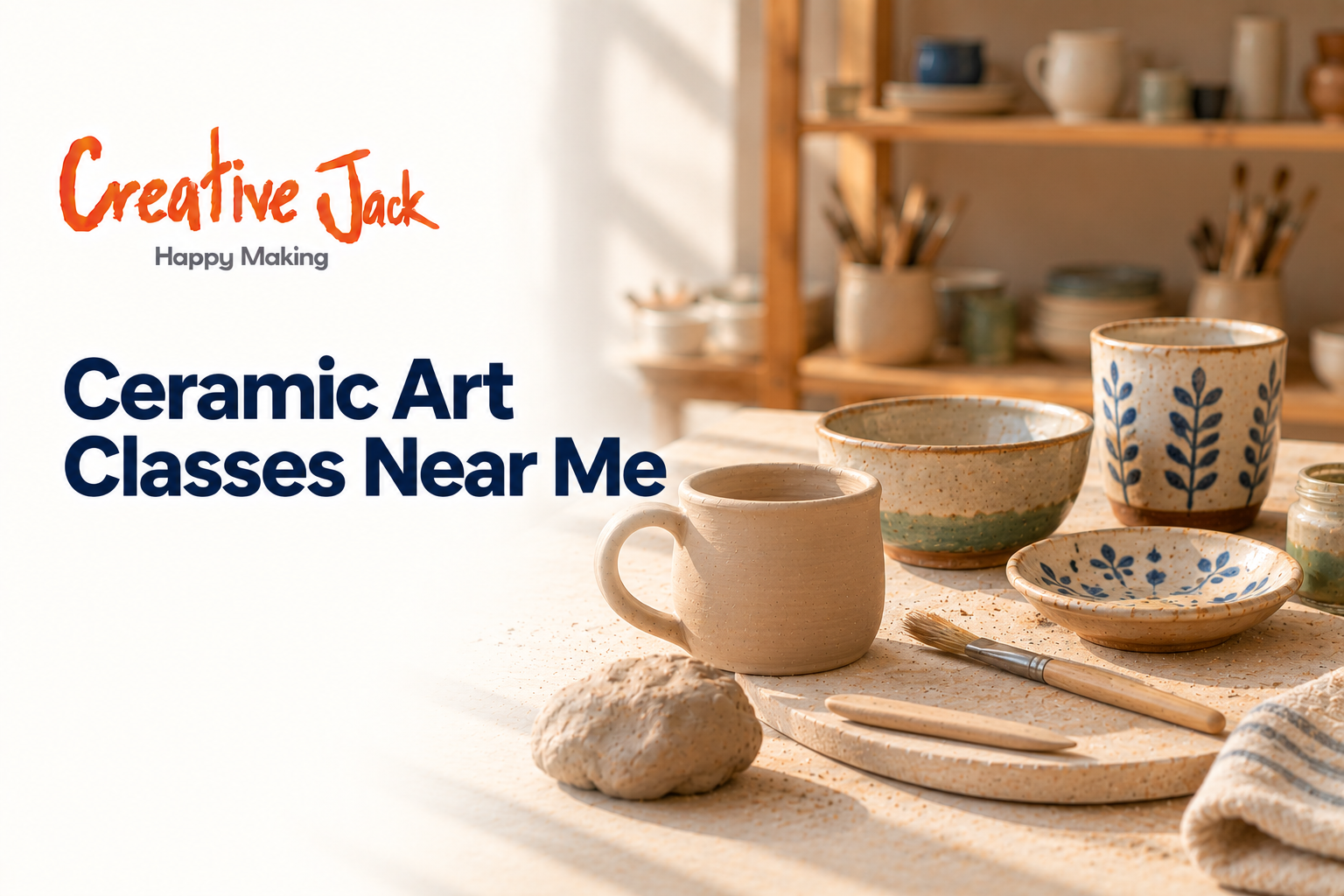
Ceramic Art Classes Near Me: Types and How to Choose
When you search for ceramic art classes near me, you will find a mix of wheel-throwing courses, hand-building classes, glaze-painting sessions, and sculpture workshops, all described as "ceramics". Strictly speaking, ceramics means objects made from clay that has been hardened by heat. At Creative Jack, our beginner pottery course teaches clay art with air-dry and terracotta clay at Art Station studios in Mumbai, Navi Mumbai, and Pune. This page explains what ceramic classes usually involve, so you can pick the one that fits.
What You'll Find on This Page
• What "ceramic art" actually means, and how it differs from pottery
• The main types of ceramic classes you will come across
• How to decide what you want to learn
• What our own pottery course covers, and what it does not
• A short checklist for comparing classes near you
Why Ceramic Class Listings Are So Confusing
Search for ceramic art classes and you will see the same handful of words used in very different ways. One studio uses "ceramics" for wheel throwing. Another uses it for painting premade mugs. A third means a university-style course on glazes and kilns. The titles are similar, but the experiences are not.
This leaves beginners guessing. You may sign up for a "ceramic class" expecting to throw a bowl and find yourself painting a pre-made plate, or the other way round. Neither is wrong, but you should know which one you are booking.
Ceramics, Pottery, and Clay Art: What Is the Difference?
Ceramics is the widest term. It covers anything made from clay and hardened by firing, including pots, tiles, figurines, and sanitaryware. Ceramic clay refers to the clay bodies used for this kind of work, such as earthenware, stoneware, and porcelain.
Pottery is a subset, usually meaning vessels and functional or decorative objects like bowls, mugs, and vases.
Clay art is the loosest term. It includes pottery, sculpture, and decorative work in clay, with or without a kiln.
In daily use, people swap these words all the time, so do not worry too much about the labels. Focus on what you will actually do in the class.
The Main Types of Ceramic Class
Wheel throwing. You learn to centre clay and shape it on a spinning wheel. It has a steep early curve and needs a studio with wheels and a kiln.
Hand building. You make pots, plates, and forms using pinch, coil, and slab methods. It is easier on beginners and suits sculptural work. Our hand building vs wheel pottery article compares the two.
Glazing and ceramic painting. You decorate pieces that have already been shaped and fired once, called bisque, then glaze and fire them again. It is a good option if you want a finished piece without learning to shape clay first.
Sculpture. You build figures or abstract forms in clay.
Mixed or taster workshops. One-off sessions that give you a sample of a few techniques.
About Ceramic Painting and Painting Pottery
Ceramic painting is one of the most popular ways to try this craft, especially for people who say they cannot draw. You choose a ready-made piece, such as a mug, a plate, or a small figurine, and paint it with ceramic paints or glazes. If you search for painting pottery sessions, this is typically what you will find. It is relaxing and gives quick results.
It is different from making a piece from scratch. If what you want is to feel clay in your hands and shape something yourself, a hand-building class is the better choice. If what you want is a lovely, finished piece with minimal effort, painting is a great option. If you are keen on painting at home, our article on beginner pottery projects includes a painted terracotta pot project that gets you started.
For ceramic painting in particular, ask the studio about it directly, since our pottery course page focuses on pottery and sculpting rather than glaze painting.
What Our Pottery Course Offers
Creative Jack's beginner Pottery Classes course is the closest thing we offer to a ceramic art class. It teaches clay handling, simple pots and plates, sculpture fundamentals, stable structures, volume, texture, and surface detail. Here are the details.
• Level: Beginner
• Session length: Two hours
• Group size: 8 to 10 students
• Clay: Air-dry clay and terracotta clay
• Certificate: Provided on completion
• Locations: Art Station Andheri West, Khar West, CBD Belapur, and FC Road Pune
Please note that this course works with air-dry and terracotta clay. If you are set on wheel throwing or glazed, kiln-fired stoneware, ask us before you enrol. We would prefer you choose the right class than feel disappointed later. There is also a Pottery & Sculpting course if you lean toward the sculptural side.
Clay Art Classes and Clay Pottery Classes: What to Look For
A lot of listings use the words clay art classes, clay pottery classes, clay and pottery classes, or pottery and clay classes interchangeably. They generally all mean a class where you work with clay. To compare them properly, ask about:
Group size. The smaller the better for beginners.
Instructor. Look for teaching experience, not just making experience.
Clay used. Air-dry, terracotta, or kiln clay each lead to different results.
Technique. Hand building, wheel, or both.
Finishing. Will your piece be fired, glazed, or painted?
What you will take home. And when.
Cost and schedule. Find out whether materials are included and how many sessions there are.
A Quick Checklist for Comparing Classes Near You
1. Is it genuinely for beginners?
2. What will I make in the first session?
3. How many students are there?
4. Which clay and which method?
5. Will my work be fired, or is it air-dry?
6. Can I try a session before committing?
7. How easy is it to get there regularly?
Learn More First
If you want to read more before choosing, our complete pottery guide for beginners covers clay types, techniques, and first projects. You can also read about how pottery classes work, and watch lessons on the Creative Jack YouTube channel. Student work is on Instagram.
FAQs
What is the difference between ceramics and pottery? Ceramics is the broader category of clay objects hardened by heat. Pottery usually refers to vessels and decorative objects.
Do I need a kiln to take a ceramic class? Not always. Air-dry clay does not need one. Kiln clays do, and the studio usually handles firing.
Is ceramic painting the same as pottery? No. Ceramic painting usually means decorating a ready-made piece. Pottery involves shaping the clay yourself.
Are your classes suitable for beginners? Yes. Our pottery course is built for complete beginners.
Do you teach wheel throwing? Our beginner course focuses on hand building with air-dry and terracotta clay. Please ask us about wheel work before enrolling.
Is there a certificate? Yes, on completion of our pottery course.
Can I see a class before signing up? You can ask about a free trial class using the link below.
Ceramic and Clay Classes in Mumbai, Navi Mumbai, and Pune
Our pottery course is offered at Art Station in Andheri West and Khar West in Mumbai, CBD Belapur in Navi Mumbai, and FC Road in Pune. For more about the Mumbai batches, see pottery classes in Mumbai, and for Pune, see pottery workshops in Pune.
Ready to Find a Class That Fits?
book a trial class, message us on WhatsApp, or see all pottery courses.
Related reads: Pottery for Beginners: Complete Guide | Pottery Classes Mumbai | Pottery Workshops Pune | Hand Building vs Wheel Pottery : Which to start with