


Resin Art Ideas for Beginners: 10 Projects to Start With (2026)
Resin Art Ideas for Beginners: 10 Projects to Start With (2026)
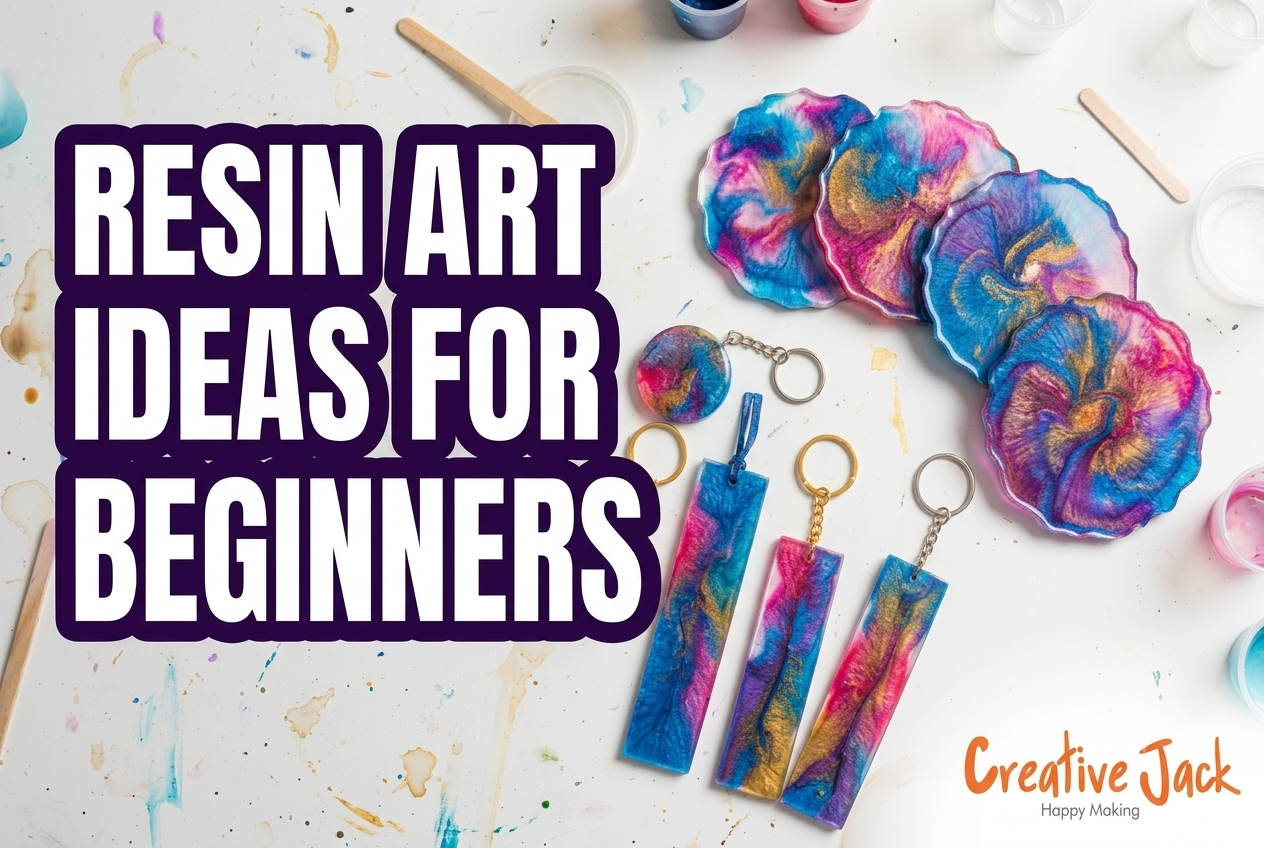
The best resin art projects for beginners are small, use minimal resin, and produce results that are genuinely impressive without requiring advanced technique. Starting with coasters, keychains, or bookmarks builds your understanding of resin behaviour — curing time, colour mixing, bubble control, before you attempt larger or more complex pieces.
Here are 10 beginner resin art ideas ranked from easiest to most ambitious, with what you'll learn from each.
In This Guide, You'll Learn:
-
10 resin art project ideas suited to complete beginners in India
-
What skills each project builds
-
What materials each project needs
-
Which projects are best for gifting or selling
-
How to progress your skills from one project to the next
Why Starting With the Right Project Matters
Most beginners make one of two mistakes with their first resin project: they start too small and get bored, or they start too large and waste expensive materials on a failed pour.
The projects in this list are chosen because they hit the sweet spot — enough complexity to be interesting and teach you something real, but forgiving enough that a beginner can produce a good result within their first few attempts.
Work through them in order if you're completely new. Each one builds on the skills and confidence of the last.
Project 1: Resin Keychains (Easiest)
What you need: Small silicone moulds (circle, teardrop, rectangle shapes), resin, pigment powders, keychain rings and jump rings
What you'll learn: Basic mixing, adding pigment, demoulding, and finishing
Resin keychains are the absolute beginner's first project. Moulds are inexpensive (₹100–₹250 for a set), resin quantities are tiny (10–20ml per keychain), and curing happens quickly in small volumes.
You can add pressed flowers, glitter, dried herbs, or mica powders to create personalised designs. The finished result is something people genuinely love to receive as gifts.
Skill level required: Zero
Approximate material cost: ₹500–₹1,000 for a complete starter set
Project 2: Resin Coasters
What you need: Round or square silicone coaster moulds, resin, pigments or alcohol inks, torch or heat gun
What you'll learn: Colour blending, fluid pours, swirling technique, surface bubble removal
Coasters are the most popular first project for good reason. A set of 4 uses about 150–200ml of resin total, teaches you colour interaction and flow, and produces something immediately functional.
Try a simple two-colour pour on your first attempt. Introduce swirling techniques with a toothpick once you understand how the resin moves. Add dried flowers in your third or fourth attempt once you're confident in the basic pour.
Skill level required: Beginner
Approximate material cost: ₹1,500–₹2,500 for moulds, resin, and basic pigments
Project 3: Resin Bookmarks
What you need: Rectangular bookmark moulds (thin, flat), resin, dried flowers or glitter, ribbon or tassel
What you'll learn: Working with inclusions, thin pour technique, adding decorative elements
Bookmark moulds are thin, typically 3-5mm deep which means a very small amount of resin goes a long way and curing is relatively fast.
The technique here focuses on placing inclusions (pressed flowers, dried herbs, metallic foils) carefully into the pour and ensuring they stay suspended in the correct position while the resin cures. This teaches you about density and placement in ways that coasters don't.
Resin bookmarks make exceptional, inexpensive gifts and sell very well at local markets and through Instagram in India.
Skill level required: Beginner
Approximate material cost: ₹800–₹1,500
Project 4: Resin Jewellery (Earrings and Pendants)
What you need: Small jewellery silicone moulds, resin, pigments, earring hooks or pendant bails, jump rings, jewellery pliers
What you'll learn: Detail work in small moulds, working with different pour depths, jewellery assembly
Resin jewellery is one of the most in-demand categories in India right now lightweight, customisable, and far more accessible than metal jewellery making.
Earring moulds come in countless shapes: geometric, floral, abstract. The challenge at this scale is bubble control — small pieces show bubbles much more clearly than larger pours. Use your torch carefully and always do a second pass 5 -10 minutes after your initial pour as new bubbles surface.
Once you can make earrings consistently, explore layered designs. A clear resin layer with flowers, topped by a tinted resin layer for depth.
Skill level required: Beginner-Intermediate
Approximate material cost: ₹1,200–₹2,500 including findings
Project 5: Resin Tray
What you need: A large rectangular or oval silicone tray mould (or a wooden tray used as a mould form), resin, pigments, metallic powder, handles
What you'll learn: Working with larger volumes, surface levelling, colour flow control
A resin tray is your first larger-scale project. Standard tray moulds require 300-500ml of mixed resin significantly more than keychains or coasters, so your measuring and mixing precision matters more.
The design opportunity here is much wider: create a marble effect using white, grey, and gold; make an ocean-inspired pour in blues and teals; or try a geode-inspired design with chunks of coloured resin and metallic accents.
Trays are one of the highest-value resin products to sell in India, with handmade decorative trays selling from ₹800 to ₹3,000+ depending on size and design.
Skill level required: Beginner-Intermediate
Approximate material cost: ₹2,000–₹4,000
Project 6: Resin Bookends
What you need: Geometric bookend moulds or wooden base forms, resin, large aggregate (stones, shells, glass pieces), metallic pigments
What you'll learn: Working with heavy inclusions, large volume pours, post-cure finishing
Bookends require you to work with much heavier inclusions than flowers or glitter- stones, shells, or decorative elements that sink differently in resin. This teaches you to work in layers: pour a base, allow partial cure, add inclusions, pour a top layer.
Bookends are also one of the most impressive-looking finished pieces for beginners- the contrast between natural stone, metallic resin and a glossy finish is consistently striking.
Skill level required: Intermediate
Approximate material cost: ₹2,500–₹4,500
Project 7: Resin Wall Art on Canvas
What you need: Stretched canvas (primed or sealed), resin, pigments, alcohol inks, a stand or elevated surface to tilt the canvas
What you'll learn: Open surface pouring, colour movement and flow, working without a mould
Pouring resin onto a flat canvas rather than into a mould is a fundamentally different experience. There are no walls to contain the flow - the design is created entirely through how you tilt and move the canvas while the resin is liquid.
Techniques to try:
-
Dirty pour: Multiple colours poured directly from a cup, tilted to spread
-
Swipe technique: A colour applied across the surface in one smooth motion using a palette knife
-
Cell technique: Using a torch to create circular "cells" in the surface as colours separate by density
This is where resin art most closely approaches traditional fluid painting and where the results can be genuinely gallery-worthy.
Skill level required: Intermediate
Approximate material cost: ₹2,000–₹4,000
Project 8: Resin with Pressed Flowers (Botanical Series)
What you need: Flat moulds or coaster moulds, properly dried pressed flowers (silica-gel dried), clear resin, UV topcoat
What you'll learn: Working with organic inclusions, layering technique, achieving crystal-clear preservation
Botanical resin pieces - preserving real flowers, leaves and plants inside clear resin are one of the most sought-after styles in India right now. The challenge is in the preparation: flowers must be completely dry before embedding, or they will rot inside the resin and ruin the piece.
Use silica gel to dry your flowers completely (1–2 weeks minimum). Work in thin layers - pour a base, cure partially, place flowers face-down, pour a thin covering layer, cure again, pour a final clear dome layer. Patience here is rewarded with spectacular results.
Skill level required: Intermediate
Approximate material cost: ₹2,000–₹3,500 (including silica gel for drying flowers)
Project 9: Resin Photo Coaster or Frame
What you need: Clear resin, printed photographs (laser printed on sealed paper inkjet prints bleed in resin), coaster or frame moulds, sealant spray
What you'll learn: Embedding non-porous flat objects, sealing techniques, clear pours
Embedding photographs in resin creates personalised keepsakes that are durable and beautiful — a popular option for gifts and events in India. The technique requires photos to be printed on laser printers and sealed with a spray sealant before embedding inkjet ink is water-based and will bleed or dissolve in uncured resin.
This project teaches you precision in placement and the importance of preparation work before the actual pour.
Skill level required: Intermediate
Approximate material cost: ₹1,500–₹3,000
Project 10: Geode Art (Most Ambitious Beginner Project)
What you need: Round canvas or wooden panel, resin, crystal chunks (clear quartz or dyed geode pieces), metallic pigments, alcohol inks, glitter
What you'll learn: Colour gradients, crystal placement, working across multiple sessions, surface texture
Geode resin art mimics the cross-section of natural mineral formations concentric rings of colour, crystal inclusions and metallic edges. It's one of the most visually dramatic resin art styles, and one of the most popular in India for home decor and commissioned pieces.
This is not a single-session project. It requires multiple pours across 2–3 days: building up colour layers, placing crystal elements, adding metallic borders, and sealing the final surface. But the result when done well is genuinely stunning and commands high prices as a finished artwork.
Skill level required: Intermediate-Advanced
Approximate material cost: ₹3,000–₹6,000 depending on crystal quality and size
Your Recommended Learning Path
If you're starting with zero resin experience, here's the sequence that builds skills most efficiently:
Week 1-2: Keychains + coasters (master the basics — mixing, pigments, bubble control, demoulding)
Week 3-4: Bookmarks + jewellery (learn inclusions and detail work)
Week 5-6: Tray or bookends (scale up volume, learn larger pours)
Week 7-8: Wall art or botanical series (open surface pouring and layering)
Month 3+: Geode art and commissioned pieces (combining all skills)
What Students Create at Creative Jack
Students at Creative Jack's Resin Art Course work through a structured progression — from first coasters in session one through to jewellery, trays, fluid art canvases, and botanical pieces as the course develops. Every project is designed to build a specific skill that prepares students for the next level.
FAQs About Resin Art Projects for Beginners
Which resin art project is the easiest to start with?
Keychains followed closely by coasters. Both use small quantities of resin, inexpensive moulds, and produce good results even on a first attempt. Coasters are slightly more impressive as finished objects.
Which resin projects sell best in India?
Coasters, trays, jewellery (especially earrings) and botanical pieces are consistently the strongest sellers through Instagram, Etsy India, and local markets. Personalised and customised pieces command premium prices.
Can I make these projects at home without a studio?
Yes, with proper ventilation, safety equipment, and a flat, level workspace. A balcony, a well-ventilated kitchen, or a dedicated hobby room with an open window all work well.
How long does a resin project take from start to finished piece?
Active working time is 30–90 minutes for most beginner projects. Curing time is 24-72 hours. So from pour to finished, holdable piece: plan for at least 2-3 days.
Do I need special moulds for each project?
Yes, each type of project generally uses a specific mould shape. Silicone moulds are reusable indefinitely with proper care, so your initial investment pays for itself across many pours.
Want to Learn All of These Projects With Guided Instruction?
Creative Jack's Resin Art Course covers the full range of beginner to intermediate resin projects with certified instructors, all materials provided in-studio, and a structured progression that means you build real skills session by session.
Book a free trial class → Or chat with us on WhatsApp: +91 83560 65552
Explore More at Creative Jack
Creative Jack — India's Creative Learning Hub. Art and design classes across Mumbai and Pune, for all ages and skill levels.