


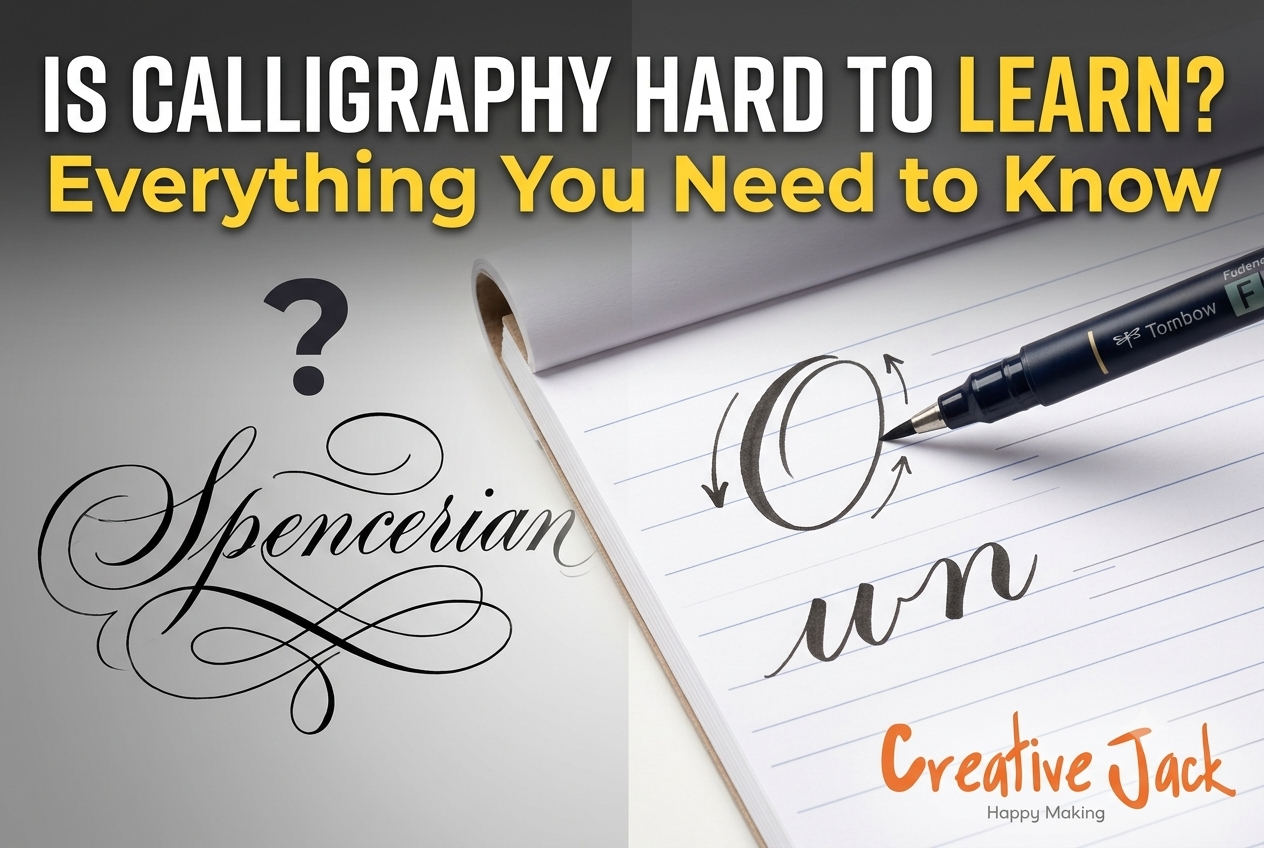
Is Calligraphy Hard to Learn? Everything You Need to Know
Calligraphy is not hard to learn, it’s a trainable motor skill built through repetition, not natural talent. Most beginners find the basic strokes easy to pick up within their first few sessions, and full alphabets become comfortable within 4-6 weeks of consistent, guided practice.
In This Guide, You’ll Learn:
• Why calligraphy feels harder than it actually is for most beginners
• What genuinely makes it easy or difficult to learn
• A realistic timeline for progress
• How to avoid the mistakes that make people quit early
Why People Assume Calligraphy Is Hard
Calligraphy has a reputation for being an “artistic” skill reserved for people with naturally neat handwriting. This assumption usually comes from:
• Seeing only finished, polished work on social media, never the practice sheets behind it
• Trying it without any structure and getting frustrated fast
• Confusing calligraphy with “having good handwriting,” which are actually unrelated skills
• Giving up after a few attempts and assuming it’s “not for them”
None of this reflects how learnable calligraphy actually is with the right approach.
What Actually Makes Calligraphy Easy to Pick Up
Calligraphy is built on a small number of repeatable strokes and not hundreds of unique shapes to memorize. Once you learn to control pressure (thick on the down-stroke, thin on the up-stroke), that same principle applies to every letter of the alphabet. This is why structured learners often improve faster than they expect.
Step 1: Learn Pressure Control First
This is the actual “hard part,” and it takes most beginners just a few practice sheets to get comfortable with. Once pressure control feels natural, letterforms come together quickly.
Step 2: Master a Handful of Basic Strokes
Ovals, lines, and loops make up nearly every letter in the alphabet. Learning these first before attempting full letters is what makes the rest of the process feel easy rather than overwhelming.
Step 3: Build Letters from Strokes You Already Know
Once basic strokes feel natural, letters stop feeling like a fresh challenge each time. They're just familiar strokes combined in a new order.
Step 4: Practice with Guidance, Not Guesswork
The biggest reason calligraphy feels hard is learning alone without feedback. A trained eye catching small errors early prevents weeks of practicing the same mistake.
Visual Proof: How Fast Real Beginners Improve
Genuine beginner-to-confident-writer progress typically happens faster than people expect once structure and feedback are introduced. Browse real student before-and-after lettering samples on the Creative Jack Instagram.
How Creative Jack Makes Calligraphy Easier to Learn
At Creative Jack, students follow a structured progression from pressure control and basic strokes to full alphabets and personal style with hands-on correction at every stage, so learners avoid months of unguided trial and error.
FAQs
Can I learn calligraphy without talent? Yes. Calligraphy is a skill that improves with practice and guidance, not an inherited talent.
How long does it take to get good at calligraphy? With consistent practice, noticeable improvement typically happens within 3-6 weeks, and confident, personal-style lettering within a few months.
Is calligraphy harder than regular handwriting improvement? It’s a different skill entirely. Calligraphy relies on pressure control and stroke sequence, not on how neat your everyday handwriting is.
Do left-handed people find calligraphy harder? Left-handed writers may need slightly adjusted pen angles, but the learning curve is not meaningfully different.
What’s the hardest part of learning calligraphy? Most beginners find consistent pressure control the trickiest part initially but it typically clicks within the first few practice sessions.
Is brush pen calligraphy easier than pointed pen calligraphy? Generally yes. Brush pens are more forgiving for beginners, while pointed pen (dip pen and ink) calligraphy has a steeper initial learning curve.
Local Relevance: Learning Calligraphy in Mumbai and Pune
If you’re based in Mumbai, Pune, or Belapur, structured, in-person or live-online classes can significantly shorten the “is this hard?” phase making most of the perceived difficulty disappear once proper feedback is in the mix.
Want to Learn Art the Right Way?
If you’ve been putting off calligraphy because it seems difficult, structured guidance is the fastest way to prove that assumption wrong. Creative Jack offers beginner to advanced calligraphy courses designed for complete first-timers.
Enquire with us now or explore our Calligraphy Courses to get started.
Related reads: What is Modern Calligraphy? A Complete Beginner’s Guide | How to Learn Calligraphy from Home Without Prior Experience | Why Calligraphy Is the Perfect Creative Hobby