



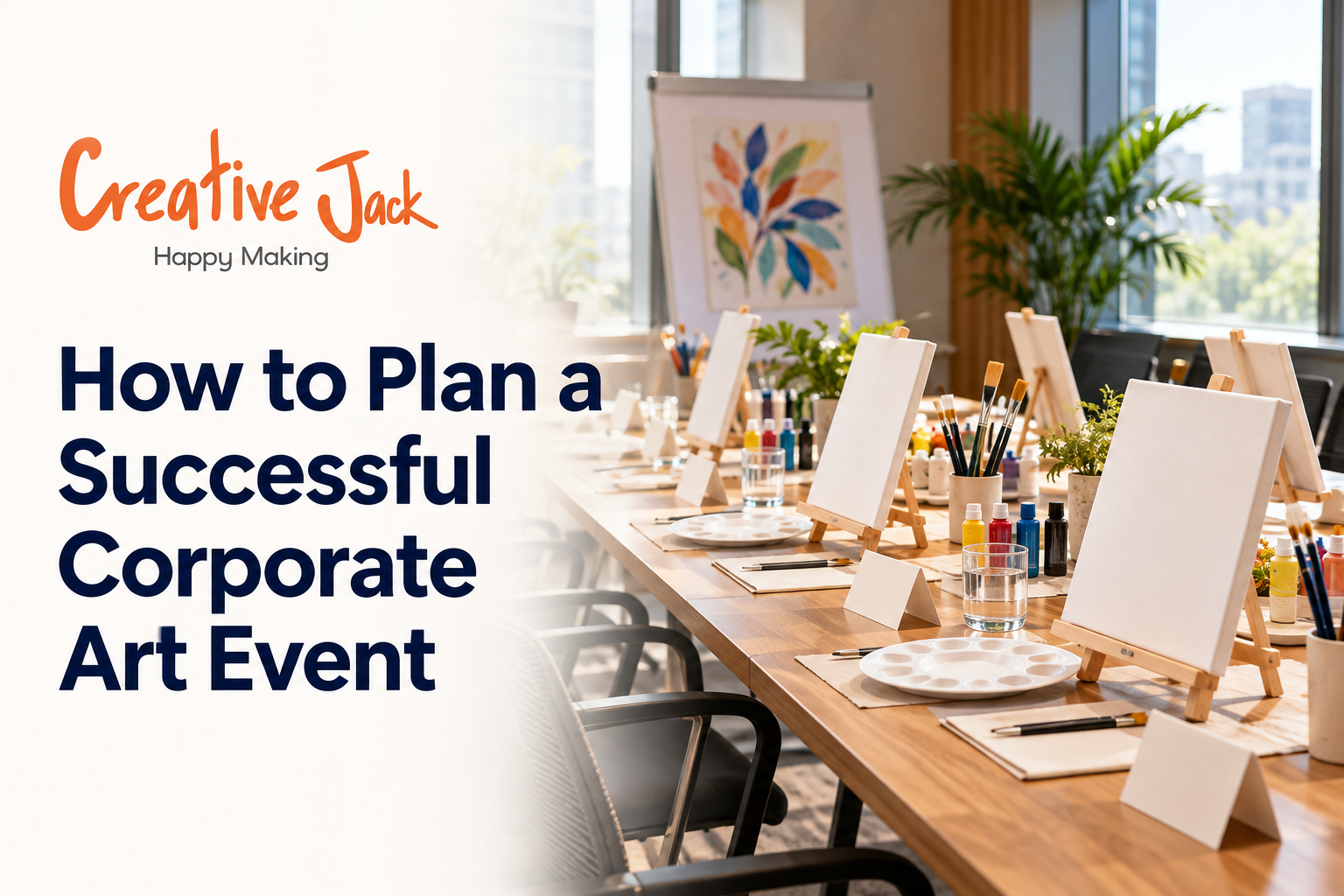
How to Plan a Successful Corporate Art Event
A successful corporate art event starts with one clear goal (bonding, stress relief, or celebration), a workshop format that fits your headcount and space, and a facilitator who handles materials, instruction, and pacing. Plan four to six weeks ahead, keep the session between 90 minutes and three hours, and make sure every employee leaves with something they made.
In This Guide, You'll Learn:
• How to set a goal for the event before choosing an activity
• What to decide on budget, venue, headcount, and timing
• How to pick a workshop format that works for non-artists
• What to confirm with the provider before you book
• How to follow up so the event actually helps the team
Why Corporate Events Often Fall Flat
Most HR and admin teams have organised at least one event that people attended politely and forgot by the next morning. The usual reasons:
• The activity was picked because it was easy to book, not because it suited the team
• Half the room felt left out, either because the activity needed a skill they lacked or because it rewarded the loudest people
• Nobody defined what the event was supposed to achieve, so there was nothing to measure afterwards
• Logistics ate the planner's attention, which left no energy for the part that matters, which is how people feel while they are there
Art-based sessions avoid several of these problems. Nobody arrives with an advantage, everyone ends with a finished piece, and the room tends to get chatty without being pushed.
Step 1: Decide What the Event Is For
Pick one main purpose. A new team that has never met in person needs introductions and light collaboration. A team coming off a heavy quarter needs something calm. A company celebrating a milestone wants a shared, memorable moment. These call for different formats, so settle this before you look at any options for corporate events for team building.
Step 2: Set Headcount, Date, and Budget Together
These three decide almost everything else. A group of 15 can do individual canvases or small-table projects with close guidance. A group of 80 usually needs a station-based format or a collaborative piece, so that people are not queuing for materials. Fix the date early, because weekday afternoons and Fridays book out first, and agree the per-head budget before you request quotes. Planners who budget for team building for events across the whole year often split the spend between one large session and a few smaller ones.
Step 3: Choose the Right Format
The format shapes how people interact:
• Individual projects at shared tables: painting, clay, resin keychains, or calligraphy where each person makes their own piece and talks while working
• Collaborative projects: a large mural or a set of canvases that join together, which suits corporate event team building activities that rely on cooperation
• Station rotations: several short activities running at once, useful for large groups and open-house style events
If your group includes people who say they cannot draw, pick formats with guided steps. A good facilitator makes the first ten minutes easy, and confidence follows.
Step 4: Pick the Venue
You can run the session at the studio, at your office, or at an offsite venue. Studios already have tables, lighting, and cleanup sorted. Office sessions save travel time but need floor protection and a plan for wet pieces. For either option, confirm table space per person and where finished work can dry.
Step 5: Confirm What the Provider Handles
Ask directly: Who brings the materials? How many facilitators will be in the room? Who handles setup and cleanup? Is there a plan for latecomers? Is photography welcome? The answers tell you quickly whether the provider has run team building events before or is improvising.
Step 6: Build a Simple Run of Show
A typical two-hour session might look like this: 15 minutes for arrival and welcome, 15 minutes for demonstration, 60 to 75 minutes of making, and 15 minutes for a group showcase and photos. Share the timeline with your attendees in advance, along with any dress notes (paint and clay are better in clothes people do not mind marking).
Step 7: Follow Up After the Event
Send a short thank-you with group photos within two days. Ask three quick questions: what people enjoyed, what felt awkward, and whether they would join another one. This turns one event into a learning loop for the next round of team building and events you plan.
Visual Proof: What a Well-Run Creative Session Looks Like
Seeing real sessions helps you picture the room, the tables, and the energy. Browse event moments on the Creative Jack Instagram and watch activity demonstrations on the Creative Jack YouTube channel.
How Creative Jack Handles Corporate Events
Creative Jack is an art studio with trained instructors across resin art, pottery, calligraphy, painting, and drawing, and it organises corporate events built around creative activities. That means the people guiding your team teach these skills for a living, which matters when half the room has never held a brush. You can read more on the Creative Jack corporate events page.
FAQs
How far ahead should I plan a corporate art event? Four to six weeks is comfortable for most groups. Larger groups, weekday afternoons, and festive months need more lead time.
How long should the session run? Between 90 minutes and three hours works for most teams. Shorter sessions suit lunch-hour formats, and longer ones suit offsites.
Can people with no art experience take part? Yes. Guided formats are designed for complete beginners, and most participants are.
Is it better to hold the event at the studio or the office? The studio is easier for materials and cleanup, while the office saves travel. Choose based on headcount and how much disruption your workspace can handle.
How do I know if the event worked? Compare attendance and feedback against the goal you set in Step 1. A short survey and a count of repeat requests are usually enough.
What if some employees do not want to participate? Offer a lighter role, such as helping with the group piece or taking photos. Participation grows when it feels optional.
Planning a Corporate Art Event in Mumbai, Pune, and Belapur
If your office is in Mumbai, Pune, or Belapur, working with a local studio means shorter travel, easier site visits, and a team that understands venue and permission quirks in these cities.
Want to Plan an Art Event Your Team Will Remember?
Tell us your headcount, date, and goal, and we will suggest a format that fits. You can explore the corporate events page, get in touch, or message us on WhatsApp.
Related reads: 10 Creative Corporate Event Ideas for Employee Engagement | How to Choose the Right Corporate Workshop for Your Team | Corporate Art Workshops for Annual Days & Office Celebrations